Legislation by province & territory
In Canada, we have both federal and provincial/territorial governments. Each level of government can pass different laws (or “legislation”) within their respective spheres of responsibility. Legislative responsibility for non-consensual intimate image abuse (NCII) is shared between the federal and provincial/territorial governments. This article provides a survey of the different legislative responses adopted so far and highlights key differences in the approaches that have been taken.
For that reason, the options available to you can depend on:
The province/territory where you live
The province/territory where you suffered the harm from the images being shared
The province/territory or country outside Canada where the person who shared the images of you lives
The province/territory or country outside Canada where the website or platform hosting the images of you is based
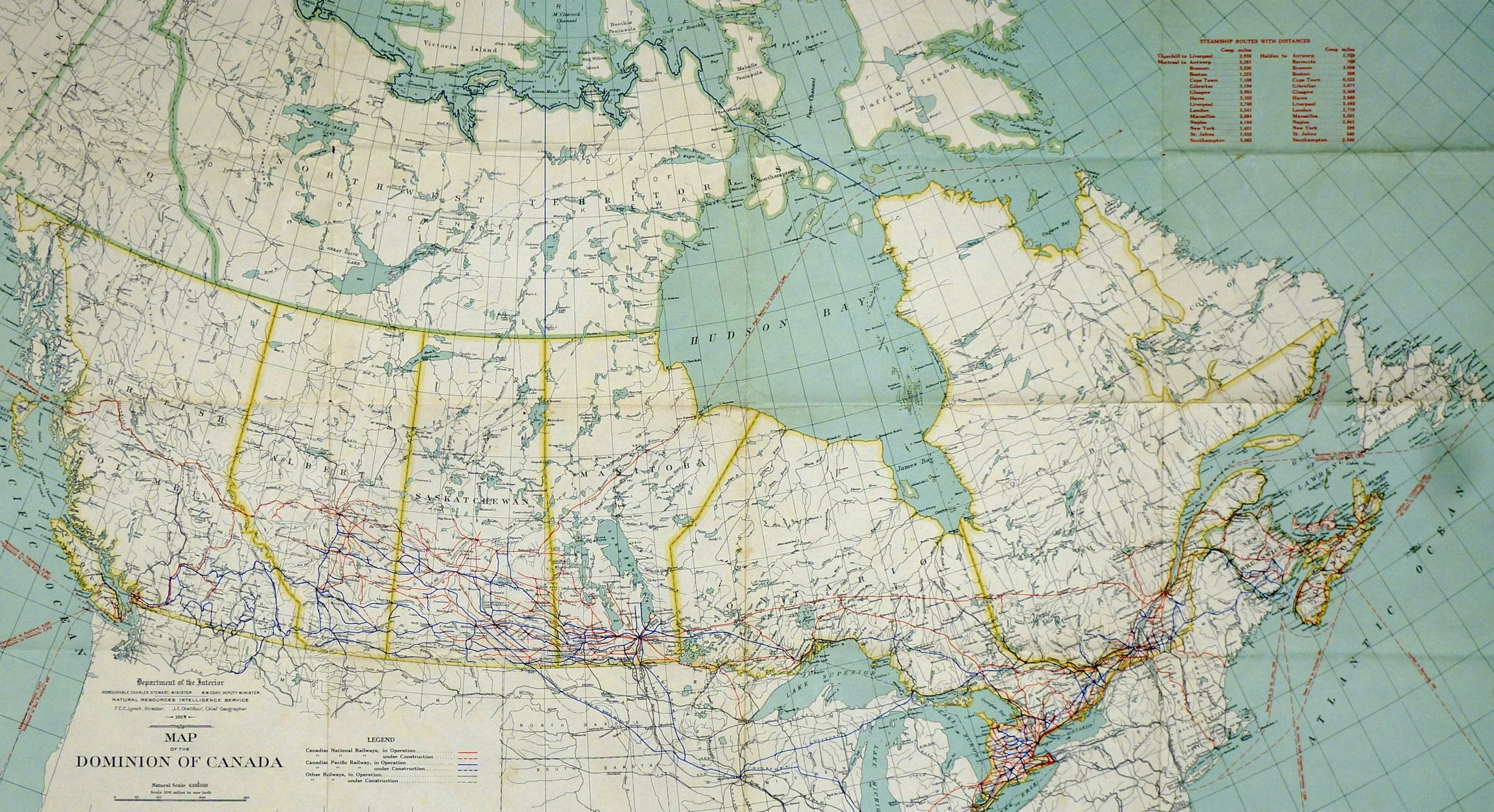
Map of Canada (1927). Published by the Department of the Interior (Canada) on Unsplash.
In the sections below, we quote directly from Canadian legislation. While modern drafting conventions reflect the use of gender-neutral language, some older legislation may still use language that reinforces the gender binary and may exclude certain trans individuals. The Digital Dignity Legal Clinic and its affiliated lawyers are committed to supporting 2SLGBTQ+ victim-survivors of NCII abuse with compassion and respect. Despite the language used in various statutes, we will refer to you in the way that best reflects your identity in all our dealings with you, and will discuss where legislation poses challenges in your specific circumstances.
-
Canada’s federal government has responsibility for the criminal law, which applies nationally across the country.
Legislation: Criminal Code, RSC 1985, c C-46, s 162.1
Adopted: 2014
Definition of “intimate image”: A visual recording of a person made by any means including a photographic, film or video recording in which the person is nude, is exposing his or her genital organs or anal region or her breasts or is engaged in explicit sexual activity
At the time of the recording, there were circumstances that gave rise to a reasonable expectation of privacy
Possible penalties for person who shared/distributed NCII: Imprisonment of up to five years; A fine paid to the government of up to $5,000; Prohibition on future use of the Internet
Court can order websites/platforms to remove NCII?: No
Includes threats to share/distribute NCII?: No
Legislation addresses deepfakes?: No (see R v RK1, 2025 ONCJ 542 at paras 29-31)
Commentary: Important information to know
The Criminal Code makes it a criminal offence for anyone to share an “intimate image” as defined above. Victim-survivors should be aware of the limits of the criminal law, which we briefly summarize here.
First, the Criminal Code only has territorial reach (“jurisdiction”) over offences committed in Canada or by persons in Canada. That means that if intimate images of you were shared by someone outside of Canada, then you likely cannot pursue criminal charges under the Criminal Code. Instead, you may have to work with police in the country or jurisdiction where the person who shared images of you is located. You should consider seeking legal advice about this.
Second, charges under the Criminal Code are not necessarily brought in the interest of victim-survivors. In the strictest legal sense, criminal offences in Canada are considered offences “against the Crown.” This means that once a complaint is made and an investigation proceeds, the decision to lay or pursue charges rests with police and Crown prosecutors, not with the person whose intimate images were shared. Victim-survivors do not control the pace of the investigation, the evidence gathered, or whether the case ultimately proceeds to trial. For this reason, victim-survivors may find working with the police to be a traumatizing or re-traumatizing experience.
Third, a criminal investigation may take months or years, and the process is focused on proving guilt “beyond a reasonable doubt.” This is the threshold applied in almost all of Canadian criminal law, and it is a very high standard. A Crown prosecutor would have to prove that the accused person (1) knowingly shared the images and (2) knew that they did not have consent to do so (or were reckless as to whether they had consent).
Fourth, the definition of “intimate image” in section 162.1 of the Criminal Code captures visual depictions of the genital or anal regions of all persons, but only the breasts of women. The courts have not yet considered what this means for transgender individuals. Further, the definition of “intimate image” requires that any sexual activity be “explicit.” Here, “explicit” means “evident, clear, and definite” and so would not capture casual sexual contact, like touching, kissing, hugging, or other actions that might imply sexual activity (see R v Verner, 2017 ONCJ 415). This creates particular complications for non-traditional forms of sexual activity, such as BDSM, kink, or other consensual practices that may be intimate or sexual in nature but do not meet the threshold of being “explicit” in the eyes of the law. Images that convey sexualized context, power dynamics, vulnerability, or implied intimacy may therefore fall outside the Criminal Code definition, even when their non-consensual distribution causes profound harm.
Finally, while threats to share or distribute intimate images are not captured by section 162.1 of the Criminal Code, other criminal offences may apply. For example, a person making such threats may be charged with criminal harassment, intimidation, extortion, or uttering threats, depending on the circumstances.
At the Digital Dignity Legal Clinic, we and our affiliated lawyers believe in supporting-victim survivors in seeking justice in whatever form they believe will support their healing and provide the most closure. We will never discourage victim-survivors from pursuing charges under the Criminal Code, and we are pleased to help support you if you wish to do so. We also promise to be non-judgmental in all our dealings with you, regardless of the forms of sexual activity you participate in. You may want to seek tailored legal advice to determine the likelihood of charges being approved in your specific circumstances, the kinds of evidence that may be required, and whether the criminal process aligns with your goals.
-
Legislation: Protecting Victims of Non-consensual Distribution of Intimate Images Act, SA 2017, c P-26.9
Adopted: 2017
Definition of “intimate image”: A visual recording of a person made by any means including a photographic, film or video recording in which the person is nude, is exposing his or her genital organs or anal region or her breasts or is engaged in explicit sexual activity
At the time of the recording, there were circumstances that gave rise to a reasonable expectation of privacy
Possible penalties for person who shared/distributed NCII: A court order prohibiting further sharing/distribution; An amount of money paid to the victim-survivor (“damages”)
Court can order websites/platforms to remove NCII?: Yes
Includes threats to share/distribute NCII?: No
Legislation addresses deepfakes?: No
Commentary: Important information to know
While Alberta’s legislation provides more options to victim-survivors of NCII abuse, it remains an imperfect tool. We briefly canvass some important things to consider below.
First, unlike the Criminal Code, the person who shared or distributed intimate images of you does not have to be located in Alberta or even in Canada. As long as some of the harm was suffered in Alberta, you may be eligible to seek a remedy under Alberta’s Protecting Victims of Non-consensual Distribution of Intimate Images Act. Where the harm occurred is something you may want to seek legal advice about.
Second, there is no specialized court or tribunal to hear NCII cases in Alberta, so you are required to use the regular court process. This can be complicated and difficult to navigate for victim-survivors. It can also be a lengthy process, since courts across Canada are dealing with an unprecedented number of cases and a shortage of judges. Unlike the criminal process however, you largely remain in control of how quickly the case moves forward. You may want to seek legal advice about the current wait time to schedule a court hearing in Alberta.
Third, a remedy under Alberta’s Protecting Victims of Non-consensual Distribution of Intimate Images Act is generally easier to obtain because the standard of proof required is lower. In simple terms, you only have to prove that it is more likely than not that intimate images of you were shared without your consent (i.e. on a “balance of probabilities”). This is easier to prove than the criminal standard of “beyond a reasonable doubt.”
Fourth, the Alberta legislation uses the same definition of “intimate image” as the federal Criminal Code. For that reason, the definition captures visual depictions of the genital or anal regions of all persons, but only the breasts of women. The courts have not yet considered what this means for transgender individuals. Further, the definition of “intimate image” requires that any sexual activity be “explicit.” Here, “explicit” means “evident, clear, and definite” and so would not capture casual sexual contact, like touching, kissing, hugging, or other actions that might imply sexual activity (see R v Verner, 2017 ONCJ 415). This creates particular complications for non-traditional forms of sexual activity, such as BDSM, kink, or other consensual practices that may be intimate or sexual in nature but do not meet the threshold of being “explicit” in the eyes of the law. Images that convey sexualized context, power dynamics, vulnerability, or implied intimacy may therefore fall outside the Alberta Protecting Victims of Non-consensual Distribution of Intimate Images Act, even when their non-consensual distribution causes profound harm.
At the Digital Dignity Legal Clinic, we and our affiliated lawyers believe in supporting-victim survivors in seeking justice in whatever form they believe will support their healing and provide the most closure. We will never discourage victim-survivors from pursuing a remedy under the Protecting Victims of Non-consensual Distribution of Intimate Images Act, and we are pleased to help support you if you wish to do so. We also promise to be non-judgmental in all our dealings with you, regardless of the forms of sexual activity you participate in. You may want to seek tailored legal advice to determine the likelihood of success in your specific circumstances, the kinds of evidence that may be required, and whether remedies available align with your goals.
-
Legislation: Intimate Images Protection Act, SBC 2023, c 11
Adopted: 2023
Definition of “intimate image”: A visual recording or visual simultaneous representation of an individual, whether or not the individual is identifiable and whether or not the image has been altered in any way, in which the individual is or is depicted as (a) engaging in a sexual act, (b) nude or nearly nude, or (c) exposing the individual's genital organs, anal region or breasts
At the time of the recording, there were circumstances that gave rise to a reasonable expectation of privacy
Possible penalties for person who shared/distributed NCII: A court order prohibiting further sharing/distribution; An amount of money paid to the victim-survivor (“damages”)
Court can order websites/platforms to remove NCII?: Yes
Includes threats to share/distribute NCII?: Yes
Legislation addresses deepfakes?: Yes
Commentary: Important information to know
British Columbia’s Intimate Images Protection Act is one of the most favourable to victim-survivors of NCII abuse. If you are a resident of British Columbia and have had intimate images of you shared, or threatened to be shared, you can expect a very fast remedy that is geared to your needs. We outline some important points for you to consider below.
First, unlike the Criminal Code, the person who shared or distributed intimate images of you does not have to be located in British Columbia, or even in Canada. As long as some of the harm was suffered in British Columbia, you may be eligible to seek a remedy under BC’s Intimate Images Protection Act. Where the harm occurred is something you may want to seek legal advice about.
Second, there is a specialized tribunal to hear NCII cases in British Columbia, and hearings of intimate image cases are expedited. Most cases can be scheduled and heard within 45 days, and you can expect a decision within 90 days from when you make your request to the tribunal. Most notably, you do not have to name the person who shared the intimate images of you if you do not wish to do so. Instead, you can apply for a general protection order directed only at websites or platforms who are hosting intimate images of you without ever having to speak to or deal with the person who shared or distributed your images. Any website or platform who does not comply is also liable to be fined for each day they refuse to comply.
Third, a remedy under BC’s Intimate Images Protection Act is generally easier to obtain because the standard of proof required is lower. In simple terms, you only have to prove that it is more likely than not that intimate images of you were shared without your consent (i.e. on a “balance of probabilities”). This is easier to prove than the criminal standard of “beyond a reasonable doubt.”
Fourth, the British Columbia legislation uses a much broader definition of “intimate image” than the federal Criminal Code. It was drafted in a gender-neutral way and captures images showing any nudity, near-nudity, genital organs, anal regions or breasts, regardless of whether they are depicted on a man, woman, or someone with another gender identity. Further, there is no requirement that the sexual act depicted in the intimate image be “explicit” like under the Criminal Code. This means that non-traditional forms of sexual activity, such as BDSM, kink, sexualized context, power dynamics, vulnerability, implied intimacy, or other consensual practices that are intimate or sexual in nature can fall within the scope of BC’s Intimate Images Protection Act.
At the Digital Dignity Legal Clinic, we and our affiliated lawyers believe in supporting-victim survivors in seeking justice in whatever form they believe will support their healing and provide the most closure. We will never discourage victim-survivors from pursuing a remedy under the Intimate Images Protection Act, and we are pleased to help support you if you wish to do so. We also promise to be non-judgmental in all our dealings with you, regardless of the forms of sexual activity you participate in. You may want to seek tailored legal advice to determine the likelihood of success in your specific circumstances, the kinds of evidence that may be required, and whether remedies available align with your goals.
-
Legislation: The Non-Consensual Distribution of Intimate Images Act, CCSM c N93
Adopted: 2024
Definition of “intimate image”: A visual recording n which the person in the image is nude or exposing their genital organs, anal region or breasts, or engaging in explicit sexual activity
At the time of the recording, there were circumstances that gave rise to a reasonable expectation of privacy
Possible penalties for person who shared/distributed NCII: A court order prohibiting further sharing/distribution; An amount of money paid to the victim-survivor (“damages”)
Court can order websites/platforms to remove NCII?: Yes
Includes threats to share/distribute NCII?: No
Legislation addresses deepfakes?: Yes
Commentary: Important information to know
Manitoba’s legislation provides more options to victim-survivors of NCII abuse than just the Criminal Code. However, it remains an imperfect tool. We briefly canvass some important things to consider below.
First, unlike the Criminal Code, the person who shared or distributed intimate images of you does not have to be located in Manitoba or even in Canada. As long as some of the harm was suffered in Manitoba, you may be eligible to seek a remedy under The Non-Consensual Distribution of Intimate Images Act. Where the harm occurred is something you may want to seek legal advice about.
Second, there is no specialized court or tribunal to hear NCII cases in Manitoba, so you are required to use the regular court process. This can be complicated and difficult to navigate for victim-survivors. It can also be a lengthy process, since courts across Canada are dealing with an unprecedented number of cases and a shortage of judges. Unlike the criminal process however, you largely remain in control of how quickly the case moves forward. You may want to seek legal advice about the current wait time to schedule a court hearing in Manitoba.
Third, a remedy under The Non-Consensual Distribution of Intimate Images Act is generally easier to obtain because the standard of proof required is lower. In simple terms, you only have to prove that it is more likely than not that intimate images of you were shared without your consent (i.e. on a “balance of probabilities”). This is easier to prove than the criminal standard of “beyond a reasonable doubt.”
Fourth, the Manitoba legislation is drafted in a gender-neutral way to capture the sharing of any genital organs, anal regions, or breasts regardless of gender. This means that transgender individuals can access remedies, regardless of the stage of their transition. However, the definition of “intimate image” requires that any sexual activity be “explicit.” Here, “explicit” means “evident, clear, and definite” and so would not capture casual sexual contact, like touching, kissing, hugging, or other actions that might imply sexual activity (see R v Verner, 2017 ONCJ 415). This creates particular complications for non-traditional forms of sexual activity, such as BDSM, kink, or other consensual practices that may be intimate or sexual in nature but do not meet the threshold of being “explicit” in the eyes of the law. Images that convey sexualized context, power dynamics, vulnerability, or implied intimacy may therefore fall outside The Non-Consensual Distribution of Intimate Images Act, even when their non-consensual distribution causes profound harm.
At the Digital Dignity Legal Clinic, we and our affiliated lawyers believe in supporting-victim survivors in seeking justice in whatever form they believe will support their healing and provide the most closure. We will never discourage victim-survivors from pursuing a remedy under the Protecting Victims of Non-consensual Distribution of Intimate Images Act, and we are pleased to help support you if you wish to do so. We also promise to be non-judgmental in all our dealings with you, regardless of the forms of sexual activity you participate in. You may want to seek tailored legal advice to determine the likelihood of success in your specific circumstances, the kinds of evidence that may be required, and whether remedies available align with your goals.
-
Legislation: Intimate Images Unlawful Distribution Act, SNB 2022, c 1
Adopted: 2022
Definition of “intimate image”: A visual recording of a person, whether or not the person is identifiable and whether or not the image has been altered in any way, made by any means, in which the person is or is depicted as (a) engaging in a sexual act, (b) nude or nearly nude, or (c) exposing their genital organs, anal region, or breasts
At the time of the recording, there were circumstances that gave rise to a reasonable expectation of privacy
Possible penalties for person who shared/distributed NCII: A court order prohibiting further sharing/distribution; An amount of money paid to the victim-survivor (“damages”)
Court can order websites/platforms to remove NCII?: Yes
Includes threats to share/distribute NCII?: Yes
Legislation addresses deepfakes?: Yes
Commentary: Important information to know
New Brunswick’s Intimate Images Unlawful Distribution Act creates a hybrid approach that seeks to balance the need for expedited takedown orders and creating a fair process for all parties involved. If you are a resident of New Brunswick and have had intimate images of you shared, or threatened to be shared, you can expect a relatively fast remedy, depending on the choices you make at the outset. We outline some important points for you to consider below.
First, unlike the Criminal Code, the person who shared or distributed intimate images of you does not have to be located in New Brunswick or even in Canada. As long as some of the harm was suffered in New Brunswick, you may be eligible to seek a remedy under the Intimate Images Unlawful Distribution Act. Where the harm occurred is something you may want to seek legal advice about.
Second, while New Brunswick has not created a specialized court or tribunal to deal with NCII abuse cases, there is a two-track system that can expedite how quickly you receive a takedown or removal order. Under track one, you can file an “application” which is faster, more summary in nature, and designed for situations where a victim-survivor needs prompt, practical orders (for example, requiring the respondent to destroy copies of the image, remove it from platforms, or stop making threats). Track two requires that you file an “action” which is a traditional lawsuit. It proceeds through pleadings, discovery, and (if necessary) a trial. Actions take longer and are more procedurally involved, but they allow the court to award full damages, including compensatory damages (for actual harm such as lost earnings or counselling costs), aggravated damages, and punitive damages. You should consider seeking legal advice about the options available to you before making a decision on which option to choose.
Third, a remedy under New Brunswick’s Intimate Images Unlawful Distribution Act is generally easier to obtain than a criminal conviction, regardless of whether you pick track one (“application”) or track two (“action”). This is because the standard of proof required is lower. In simple terms, you only have to prove that it is more likely than not that intimate images of you were shared without your consent (i.e. on a “balance of probabilities”). This is easier to prove than the criminal standard of “beyond a reasonable doubt.”
Fourth, the New Brunswick legislation uses a much broader definition of “intimate image” than the federal Criminal Code. It was drafted in a gender-neutral way and captures images showing any nudity, near-nudity, genital organs, anal regions or breasts, regardless of whether they are depicted on a man, woman, or someone with another gender identity. Further, there is no requirement that the sexual act depicted in the intimate image be “explicit” like under the Criminal Code. This means that non-traditional forms of sexual activity, such as BDSM, kink, sexualized context, power dynamics, vulnerability, implied intimacy, or other consensual practices that are intimate or sexual in nature can fall within the scope of the Intimate Images Unlawful Distribution Act.
At the Digital Dignity Legal Clinic, we and our affiliated lawyers believe in supporting-victim survivors in seeking justice in whatever form they believe will support their healing and provide the most closure. We will never discourage victim-survivors from pursuing a remedy under the Intimate Images Protection Act, and we are pleased to help support you if you wish to do so. We also promise to be non-judgmental in all our dealings with you, regardless of the forms of sexual activity you participate in. You may want to seek tailored legal advice to determine the likelihood of success in your specific circumstances, the kinds of evidence that may be required, and whether remedies available align with your goals.
-
Legislation: Intimate Images Protection Act, RSNL 2018, c I-22
Adopted: 2018
Definition of “intimate image”: A visual recording of a person made by any means, including a photograph, film or video recording in which the person depicted in the image is nude or is exposing his or her genital organs or anal region or her breasts, or is engaged in explicit sexual activity
At the time of the recording, there were circumstances that gave rise to a reasonable expectation of privacy
Possible penalties for person who shared/distributed NCII: A court order prohibiting further sharing/distribution; An amount of money paid to the victim-survivor (“damages”)
Court can order websites/platforms to remove NCII?: Yes
Includes threats to share/distribute NCII?: No
Legislation addresses deepfakes?: No
Commentary: Important information to know
The legislation in Newfoundland and Labrador reflects older drafting conventions and a more narrow conception of what counts as an intimate image. For that reason, it remains an imperfect tool and we canvass some important things to consider below.
First, unlike the Criminal Code, the person who shared or distributed intimate images of you does not have to be located in Newfoundland and Labrador, or even in Canada. As long as some of the harm was suffered in Newfoundland and Labrador, you may be eligible to seek a remedy under the Intimate Images Protection Act. Where the harm occurred is something you may want to seek legal advice about.
Second, there is no specialized court or tribunal to hear NCII cases in Newfoundland and Labrador, so you are required to use the regular court process like for any other lawsuit. This can be complicated and difficult to navigate for victim-survivors. It can also be a lengthy process, since courts across Canada are dealing with an unprecedented number of cases and a shortage of judges. Unlike the criminal process however, you largely remain in control of how quickly the case moves forward. You may want to seek legal advice about the current wait time to schedule a court hearing in Newfoundland and Labrador.
Third, a remedy under Newfoundland and Labrador’s Intimate Images Protection Act is generally easier to obtain because the standard of proof required is lower. In simple terms, you only have to prove that it is more likely than not that intimate images of you were shared without your consent (i.e. on a “balance of probabilities”). This is easier to prove than the criminal standard of “beyond a reasonable doubt.”
Fourth, the Newfoundland and Labrador legislation uses the same definition of “intimate image” as the federal Criminal Code. For that reason, the definition captures visual depictions of the genital or anal regions of all persons, but only the breasts of women. The courts have not yet considered what this means for transgender individuals. Further, the definition of “intimate image” requires that any sexual activity be “explicit.” Here, “explicit” means “evident, clear, and definite” and so would not capture casual sexual contact, like touching, kissing, hugging, or other actions that might imply sexual activity (see R v Verner, 2017 ONCJ 415). This creates particular complications for non-traditional forms of sexual activity, such as BDSM, kink, or other consensual practices that may be intimate or sexual in nature but do not meet the threshold of being “explicit” in the eyes of the law. Images that convey sexualized context, power dynamics, vulnerability, or implied intimacy may therefore fall outside the Newfoundland and Labrador Intimate Images Protection Act, even when their non-consensual distribution causes profound harm.
At the Digital Dignity Legal Clinic, we and our affiliated lawyers believe in supporting-victim survivors in seeking justice in whatever form they believe will support their healing and provide the most closure. We will never discourage victim-survivors from pursuing a remedy under the Protecting Victims of Non-consensual Distribution of Intimate Images Act, and we are pleased to help support you if you wish to do so. We also promise to be non-judgmental in all our dealings with you, regardless of the forms of sexual activity you participate in. You may want to seek tailored legal advice to determine the likelihood of success in your specific circumstances, the kinds of evidence that may be required, and whether remedies available align with your goals.
-
As of November 2025, the Northwest Territories has not adopted legislation addressing NCII abuse. Courts in the Northwest Territories also have not recognized the civil wrong (i.e. “tort”) of “public disclosure of private facts.” This means that you would have to start a lawsuit and would likely be the first in the Northwest Territories to ask the courts to recognize a new common law tort to address the non-consensual distribution of intimate images. While courts in other provinces, like Ontario, have recognized similar claims, there is no guarantee that a court in the Northwest Territories would follow those decisions. As a result, pursuing a civil claim is possible, but it would be legally complex, uncertain, and potentially time-consuming. You should seek tailored legal advice if you are considering this option.
The Digital Dignity Legal Clinic remains actively involved in advocacy efforts to strengthen legal protections against NCII abuse in the Northwest Territories, including by promoting the adoption of legislation, providing our expertise to governments, and raising public awareness.
-
Legislation: Intimate Images and Cyber-protection Act, SNS 2017, c 7
Adopted: 2017
Definition of “intimate image”: A visual recording of a person made by any means, including a photograph, film or video recording, in which a person depicted in the image is nude, is exposing the person’s genital organs, anal region or her breasts, or is engaged in explicit sexual activity
At the time of the recording, there were circumstances that gave rise to a reasonable expectation of privacy
Possible penalties for person who shared/distributed NCII: A court order prohibiting further sharing/distribution; An amount of money paid to the victim-survivor (“damages”)
Court can order websites/platforms to remove NCII?: Yes
Includes threats to share/distribute NCII?: Possibly under the definition of cyber-bullying
Legislation addresses deepfakes?: No
Commentary: Important information to know
Nova Scotia’s Intimate Images and Cyber-protection Act is an example of an older piece of legislation that has not been updated since it was first enacted. For that reason, while it expands the options available to victim-survivors of NCII abuse, it has its limits. We address some of these below.
First, unlike the Criminal Code, the person who shared or distributed intimate images of you does not have to be located in Nova Scotia, or even in Canada. As long as some of the harm was suffered in Nova Scotia, you may be eligible to seek a remedy under the Intimate Images and Cyber-protection Act. Where the harm occurred is something you may want to seek legal advice about.
Second, there is no specialized court or tribunal to hear NCII cases in Nova Scotia, so you are required to use the regular court process. This can be complicated and difficult to navigate for victim-survivors. It can also be a lengthy process, since courts across Canada are dealing with an unprecedented number of cases and a shortage of judges. Unlike the criminal process however, you largely remain in control of how quickly the case moves forward. You may want to seek legal advice about the current wait time to schedule a court hearing in Nova Scotia.
Third, a remedy under the Intimate Images and Cyber-protection Act is generally easier to obtain because the standard of proof required is lower. In simple terms, you only have to prove that it is more likely than not that intimate images of you were shared without your consent (i.e. on a “balance of probabilities”). This is easier to prove than the criminal standard of “beyond a reasonable doubt.”
Fourth, the Nova Scotia legislation uses the same definition of “intimate image” as the federal Criminal Code. For that reason, the definition captures visual depictions of the genital or anal regions of all persons, but only the breasts of women. The courts have not yet considered what this means for transgender individuals. Further, the definition of “intimate image” requires that any sexual activity be “explicit.” Here, “explicit” means “evident, clear, and definite” and so would not capture casual sexual contact, like touching, kissing, hugging, or other actions that might imply sexual activity (see R v Verner, 2017 ONCJ 415). This creates particular complications for non-traditional forms of sexual activity, such as BDSM, kink, or other consensual practices that may be intimate or sexual in nature but do not meet the threshold of being “explicit” in the eyes of the law. Images that convey sexualized context, power dynamics, vulnerability, or implied intimacy may therefore fall outside the Nova Scotia Intimate Images and Cyber-protection Act, even when their non-consensual distribution causes profound harm.
At the Digital Dignity Legal Clinic, we and our affiliated lawyers believe in supporting-victim survivors in seeking justice in whatever form they believe will support their healing and provide the most closure. We will never discourage victim-survivors from pursuing a remedy under the Protecting Victims of Non-consensual Distribution of Intimate Images Act, and we are pleased to help support you if you wish to do so. We also promise to be non-judgmental in all our dealings with you, regardless of the forms of sexual activity you participate in. You may want to seek tailored legal advice to determine the likelihood of success in your specific circumstances, the kinds of evidence that may be required, and whether remedies available align with your goals.
-
As of November 2025, Nunavut has not adopted legislation addressing NCII abuse. Nunavut courts also have not recognized the civil wrong (i.e. “tort”) of “public disclosure of private facts.” This means that you would have to start a lawsuit and would likely be the first in Nunavut to ask the courts to recognize a new common law tort to address the non-consensual distribution of intimate images. While courts in other provinces, like Ontario, have recognized similar claims, there is no guarantee that a court in Nunavut would follow those decisions. As a result, pursuing a civil claim is possible, but it would be legally complex, uncertain, and potentially time-consuming. You should seek tailored legal advice if you are considering this option.
The Digital Dignity Legal Clinic remains actively involved in advocacy efforts to strengthen legal protections against NCII abuse in Nunavut, including by promoting the adoption of legislation, providing our expertise to governments, and raising public awareness.
-
As of November 2025, Ontario has not adopted legislation addressing NCII abuse. However, courts in Ontario have widely recognized the civil wrong (i.e. “tort”) of “public disclosure of private facts” (see Jane Doe 72511 v NM, 2018 ONSC 6607). This means that you must prove that the person who shared or distributed intimate images of you (a) publicized an aspect of your private life; (b) you did not consent to the publication; (c) the matter publicized or its publication would be highly offensive to a reasonable person; and (d) the publication was not of legitimate concern to the public.
Available remedies include a court order that the person stop sharing images of you, that websites take down or remove images of you, or that the person who shared images of you pay you some money (i.e. “damages”). You would have to start a lawsuit which can be legally complex and potentially time-consuming. You should seek tailored legal advice if you are considering this option.
The Digital Dignity Legal Clinic remains actively involved in advocacy efforts to strengthen legal protections against NCII abuse in Ontario, including by promoting the adoption of legislation, providing our expertise to governments, and raising public awareness.
-
Legislation: Intimate Images Protection Act, RSPEI 2020, c 55
Adopted: 2020
Definition of “intimate image”: A visual recording of a person, whether or not the person is identifiable and whether or not the image has been altered in any way, made by any means, in which the person is or is depicted as (i) engaging in a sexual act, or (ii) nude or nearly nude or exposing the person’s genital organs, anal region or breasts
At the time of the recording, there were circumstances that gave rise to a reasonable expectation of privacy
Possible penalties for person who shared/distributed NCII: A court order prohibiting further sharing/distribution; An amount of money paid to the victim-survivor (“damages”)
Court can order websites/platforms to remove NCII?: Yes
Includes threats to share/distribute NCII?: Yes
Legislation addresses deepfakes?: Yes
Commentary: Important information to know
Prince Edward Island’s Intimate Images Protection Act creates a hybrid approach that seeks to balance the need for expedited takedown orders and creating a fair process for all parties involved. If you are a resident of New Brunswick and have had intimate images of you shared, or threatened to be shared, you can expect a relatively fast remedy, depending on the choices you make at the outset. We outline some important points for you to consider below.
First, unlike the Criminal Code, the person who shared or distributed intimate images of you does not have to be located in Prince Edward Island, or even in Canada. As long as some of the harm was suffered in PEI, you may be eligible to seek a remedy under PEI’s Intimate Images Protection Act. Where the harm occurred is something you may want to seek legal advice about.
Second, while Prince Edward Island has not created a specialized court or tribunal to deal with NCII abuse cases, there is a two-track system that can expedite how quickly you receive a takedown or removal order. Under track one, you can file an “application” which is faster, more summary in nature, and designed for situations where a victim-survivor needs prompt, practical orders (for example, requiring the respondent to destroy copies of the image, remove it from platforms, or stop making threats). Track two requires that you file an “action” which is a traditional lawsuit. It proceeds through pleadings, discovery, and (if necessary) a trial. Actions take longer and are more procedurally involved, but they allow the court to award full damages, including compensatory damages (for actual harm such as lost earnings or counselling costs), aggravated damages, and punitive damages. You should consider seeking legal advice about the options available to you before making a decision on which option to choose.
Third, a remedy under PEI’s Intimate Images Protection Act is generally easier to obtain because the standard of proof required is lower. In simple terms, you only have to prove that it is more likely than not that intimate images of you were shared without your consent (i.e. on a “balance of probabilities”). This is easier to prove than the criminal standard of “beyond a reasonable doubt.”
Fourth, the Prince Edward Island legislation uses a much broader definition of “intimate image” than the federal Criminal Code. It was drafted in a gender-neutral way and captures images showing any nudity, near-nudity, genital organs, anal regions or breasts, regardless of whether they are depicted on a man, woman, or someone with another gender identity. Further, there is no requirement that the sexual act depicted in the intimate image be “explicit” like under the Criminal Code. This means that non-traditional forms of sexual activity, such as BDSM, kink, sexualized context, power dynamics, vulnerability, implied intimacy, or other consensual practices that are intimate or sexual in nature can fall within the scope of PEI’s Intimate Images Protection Act.
At the Digital Dignity Legal Clinic, we and our affiliated lawyers believe in supporting-victim survivors in seeking justice in whatever form they believe will support their healing and provide the most closure. We will never discourage victim-survivors from pursuing a remedy under the Intimate Images Protection Act, and we are pleased to help support you if you wish to do so. We also promise to be non-judgmental in all our dealings with you, regardless of the forms of sexual activity you participate in. You may want to seek tailored legal advice to determine the likelihood of success in your specific circumstances, the kinds of evidence that may be required, and whether remedies available align with your goals.
-
Legislation: Act to counter non-consensual sharing of intimate images, CQLR c P-9.0002
Adopted: 2024
Definition of “intimate image”: Any image, altered or not, that represents or appears to represent a person either nude or partially nude, exposing their breasts, genital organs, anal region or buttocks, or engaging in an explicit sexual activity
At the time of the recording, there were circumstances that gave rise to a reasonable expectation of privacy
Possible penalties for person who shared/distributed NCII: A court order prohibiting further sharing/distribution; An amount of money paid to the victim-survivor (“damages”)
Court can order websites/platforms to remove NCII?: Yes
Includes threats to share/distribute NCII?: Yes
Legislation addresses deepfakes?: Yes
Commentary: Important information to know
Quebec’s Act to counter non-consensual sharing of intimate images is intended to create a simple and urgent option to protect the dignity, honour and reputation and the right to respect of privacy for persons who have had intimate images of them shared without their consent. That being said, the Quebec legislation has some specific considerations you may want to be aware of.
First, unlike the Criminal Code, the person who shared or distributed intimate images of you does not have to be located in Quebec, or even in Canada. As long as some of the harm was suffered in Quebec, you may be eligible to seek a remedy under PEI’s Intimate Images Protection Act. Where the harm occurred is something you may want to seek legal advice about.
Second, while Quebec has not created a specialized court or tribunal to deal with NCII abuse cases, the Act to counter non-consensual sharing of intimate images provides that NCII cases are to be handled and heard urgently by the Court of Quebec. Further, it is not necessary to name the person who shared the intimate images of you if you do not wish to do so. Instead, you can apply for a general order directed only at websites or platforms who are hosting intimate images of you without ever having to speak to or deal with the person who shared or distributed your images. Any website or platform who does not comply is also liable to be fined for each day they refuse to comply.
Third, Quebec’s legislation uses a gender-neutral definition of “intimate image.” As opposed to the Criminal Code, the Act to counter non-consensual sharing of intimate images captures images showing any nudity, near-nudity, genital organs, anal regions or breasts, regardless of whether they are depicted on a man, woman, or someone with another gender identity. Quebec’s legislation also explicitly makes reference to the buttocks when other provinces do not. However, the Quebec legislation does require that the sexual activity depicted in the intimate image be “explicit” like under the Criminal Code. This means that non-traditional forms of sexual activity, such as BDSM, kink, sexualized context, power dynamics, vulnerability, implied intimacy, or other consensual practices that are intimate or sexual in nature likely fall outside the scope of Quebec’s Act to counter non-consensual sharing of intimate images.
At the Digital Dignity Legal Clinic, we and our affiliated lawyers believe in supporting-victim survivors in seeking justice in whatever form they believe will support their healing and provide the most closure. We will never discourage victim-survivors from pursuing a remedy under the Act to counter non-consensual sharing of intimate images, and we are pleased to help support you if you wish to do so. We also promise to be non-judgmental in all our dealings with you, regardless of the forms of sexual activity you participate in. You may want to seek tailored legal advice to determine the likelihood of success in your specific circumstances, the kinds of evidence that may be required, and whether remedies available align with your goals.
-
Legislation: The Privacy Act, RSS 1978, c P-24
Adopted: 2018
Definition of “intimate image”: A visual recording of a person, whether or not the person is identifiable or whether or not the image has been altered in any way, made by any means, including a photograph, film or video recording in which the person in the image is or is depicted as (i) nude or exposing his or her genital organs or anal region or her breasts or (ii) engaging in explicit sexual activity
At the time of the recording, there were circumstances that gave rise to a reasonable expectation of privacy
Possible penalties for person who shared/distributed NCII: A court order prohibiting further sharing/distribution; An amount of money paid to the victim-survivor (“damages”)
Court can order websites/platforms to remove NCII?: Yes
Includes threats to share/distribute NCII?: Yes
Legislation addresses deepfakes?: Yes
Commentary: Important information to know
While Saskatchewan’s legislation provides more options to victim-survivors of NCII abuse, it remains an imperfect tool. We briefly canvass some important things to consider below.
First, unlike the Criminal Code, the person who shared or distributed intimate images of you does not have to be located in Saskatchewan, or even in Canada. As long as some of the harm was suffered in Saskatchewan, you may be eligible to seek a remedy under The Privacy Act. Where the harm occurred is something you may want to seek legal advice about.
Second, there is no specialized court or tribunal to hear NCII cases in Saskatchewan, so you are required to use the regular court process. This can be complicated and difficult to navigate for victim-survivors. It can also be a lengthy process, since courts across Canada are dealing with an unprecedented number of cases and a shortage of judges. Unlike the criminal process however, you largely remain in control of how quickly the case moves forward. You may want to seek legal advice about the current wait time to schedule a court hearing in Saskatchewan.
Third, a remedy under The Privacy Act is generally easier to obtain because the standard of proof required is lower. In simple terms, you only have to prove that it is more likely than not that intimate images of you were shared without your consent (i.e. on a “balance of probabilities”). This is easier to prove than the criminal standard of “beyond a reasonable doubt.”
Fourth, the Saskatchewan legislation uses the same definition of “intimate image” as the federal Criminal Code. For that reason, the definition captures visual depictions of the genital or anal regions of all persons, but only the breasts of women. The courts have not yet considered what this means for transgender individuals. Further, the definition of “intimate image” requires that any sexual activity be “explicit.” Here, “explicit” means “evident, clear, and definite” and so would not capture casual sexual contact, like touching, kissing, hugging, or other actions that might imply sexual activity (see R v Verner, 2017 ONCJ 415). This creates particular complications for non-traditional forms of sexual activity, such as BDSM, kink, or other consensual practices that may be intimate or sexual in nature but do not meet the threshold of being “explicit” in the eyes of the law. Images that convey sexualized context, power dynamics, vulnerability, or implied intimacy may therefore fall outside The Privacy Act, even when their non-consensual distribution causes profound harm.
At the Digital Dignity Legal Clinic, we and our affiliated lawyers believe in supporting-victim survivors in seeking justice in whatever form they believe will support their healing and provide the most closure. We will never discourage victim-survivors from pursuing a remedy under The Privacy Act, and we are pleased to help support you if you wish to do so. We also promise to be non-judgmental in all our dealings with you, regardless of the forms of sexual activity you participate in. You may want to seek tailored legal advice to determine the likelihood of success in your specific circumstances, the kinds of evidence that may be required, and whether remedies available align with your goals.
-
As of November 2025, the Yukon has not adopted legislation addressing NCII abuse. Yukon courts also have not recognized the civil wrong (i.e. “tort”) of “public disclosure of private facts.” This means that you would have to start a lawsuit and would likely be the first in the Yukon to ask the courts to recognize a new common law tort to address the non-consensual distribution of intimate images. While courts in other provinces, like Ontario, have recognized similar claims, there is no guarantee that a Yukon court would follow those decisions. As a result, pursuing a civil claim is possible, but it would be legally complex, uncertain, and potentially time-consuming. You should seek tailored legal advice if you are considering this option.
The Digital Dignity Legal Clinic remains actively involved in advocacy efforts to strengthen legal protections against NCII abuse, including by promoting the adoption of legislation, providing our expertise to governments, and raising public awareness.